
What Is Qi2 Wireless Charging? The Complete 2026 Explainer
If you have shopped for a wireless charger recently, you have probably seen the label Qi2 — and wondered what it actually means. What is Qi2? In short, Qi2 is the latest wireless charging standard from the Wireless Power Consortium, and its big idea is simple: magnets. By adding a magnetic ring that snaps your phone into exactly the right position on the charger, Qi2 fixes the most annoying problem with older wireless charging — a phone placed slightly off-centre charging slowly, or not at all.
It also brings faster standard speeds, better efficiency, and stronger safety certification. In this guide we explain how Qi2 works, how it differs from the original Qi and from Apple’s MagSafe, which phones support it, and how to choose a charger that is actually worth your money in 2026.
What Is Qi2 Wireless Charging, Exactly?
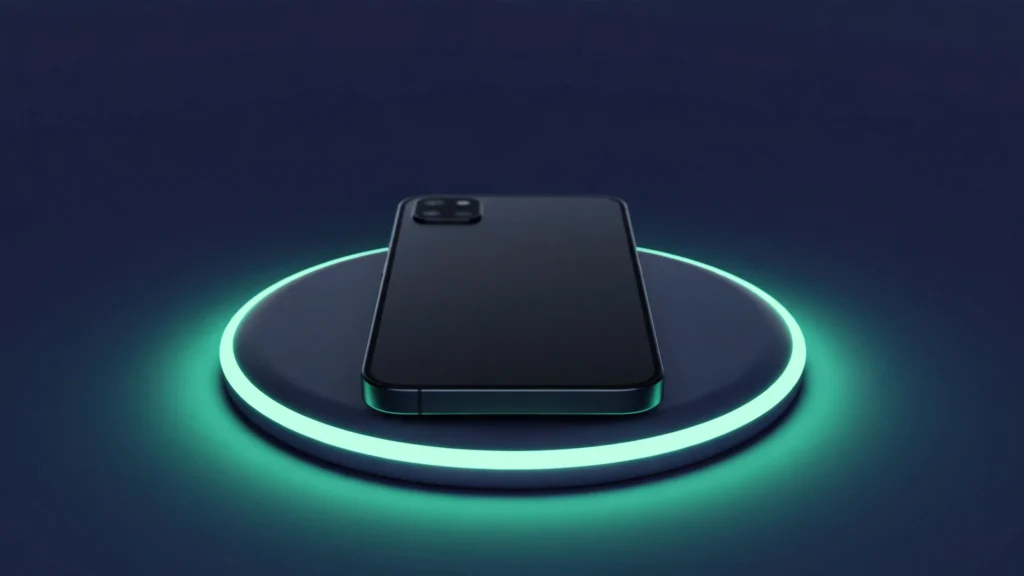
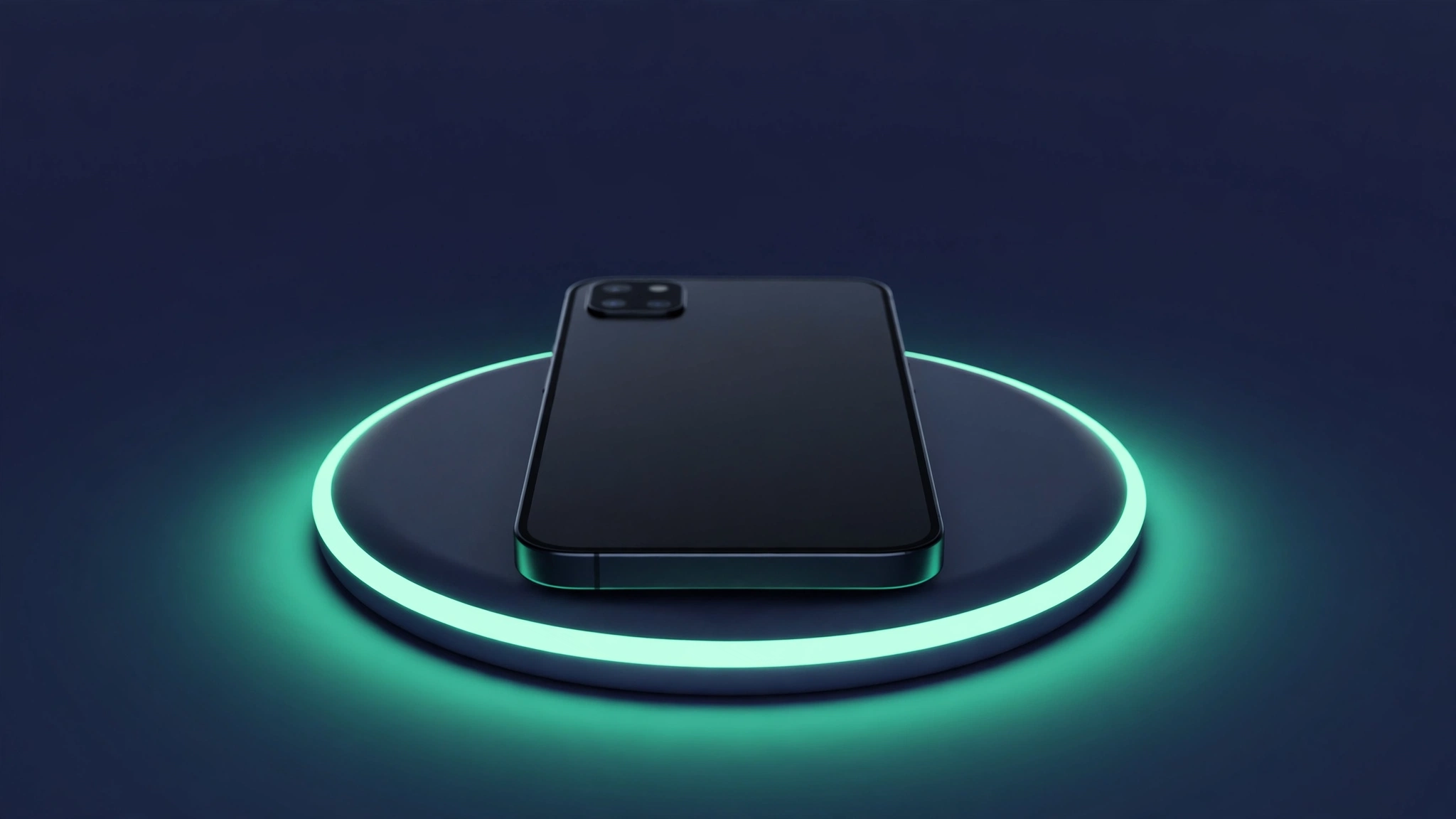
Qi2 is the successor to the original Qi wireless charging standard, developed by the Wireless Power Consortium (WPC), the industry group that certifies wireless chargers. The “Qi” name is pronounced “chee,” and Qi2 builds on the same basic technology — electromagnetic induction, where a coil in the charger creates a magnetic field that a coil in your phone converts back into electricity — but adds a magnetic alignment system called the Magnetic Power Profile. That ring of magnets, built into both the charger and compatible phones or cases, pulls the phone into perfect alignment with the charging coil every time you set it down.
That alignment is more than a convenience. Wireless charging efficiency drops sharply when the coils are misaligned, which wastes energy as heat and slows charging. By locking the coils together, Qi2 charging is more consistent, more efficient, and cooler than a misaligned Qi charge. The standard also includes stricter authentication and safety requirements, so a certified Qi2 charger has passed WPC testing for interoperability and foreign-object detection — the system that stops a charger from heating up when keys or coins are left on it. In practical terms, Qi2 is wireless charging done properly, rather than wireless charging that sometimes works.
Qi vs Qi2: What Actually Changed?
The original Qi standard, launched more than a decade ago, made wireless charging possible but left alignment up to you. Place your phone carefully and it charged; place it a centimetre off and it charged slowly, intermittently, or not at all — often discovered only in the morning when the battery was still low. Qi chargers also varied widely in power, with many pads delivering just 5W or 7.5W, which felt slow compared with wired charging. Qi2 addresses both problems at once: the magnetic ring solves alignment, and the baseline power for Qi2’s Magnetic Power Profile is 15W, a meaningful step up from the slowest Qi pads.
There is also a newer, faster tier to know about. While 15W remains the standard Qi2 speed, some newer Qi2 chargers advertise 25W charging — for example, Anker’s Prime Wireless Charging Station, which pairs 25W output with active cooling. That 25W tier depends on your phone supporting it, and on the charger being properly certified, so do not assume every “Qi2” label means 25W. The safe way to read a charger listing is to check two things separately: is it Qi2 certified, and what wattage does it actually deliver to your specific phone? A charger can be Qi2 certified at 15W and still be an excellent purchase — 25W is a bonus, not the definition of Qi2.
Qi2 vs MagSafe: Are They the Same Thing?
This is the question that confuses most buyers, and the answer is: closely related, but not identical. Apple’s MagSafe, introduced with the iPhone 12, uses a magnetic ring to align an iPhone with a MagSafe charger, delivering up to 15W (and higher on newer models with compatible chargers). Qi2’s Magnetic Power Profile is based on similar magnetic alignment technology, and Apple contributed to the Qi2 standard — which is why many Qi2 chargers work magnetically with MagSafe-compatible iPhones. In practice, a Qi2 charger with a magnetic ring will snap onto an iPhone much like a MagSafe charger does, and will charge it at Qi2 speeds.
The distinction matters for Android users and for certification. MagSafe is Apple’s own system, with Apple certification and specific iPhone features. Qi2 is an open industry standard that any manufacturer can adopt, which means Android phones with built-in magnetic alignment — or with a magnetic case — can also benefit. Some Android phones already support Qi2 natively, while others need a magnetic case to get the snap-on alignment, though they may still charge wirelessly without magnets at standard Qi speeds. If you use an iPhone, a Qi2 charger is generally a safe, often cheaper alternative to a first-party MagSafe charger. If you use Android, check whether your phone lists Qi2 support or whether you will need a magnetic case to get the full benefit.
Which Phones Support Qi2 in 2026?
Qi2 support is growing but not yet universal, so checking your phone is essential before you buy. iPhones from the iPhone 12 onward work magnetically with Qi2 chargers, since their built-in MagSafe magnets align with the Qi2 magnetic ring — though the exact charging speed depends on the iPhone model and the charger. On Android, a growing number of flagship and mid-range phones launched in 2025 and 2026 include native Qi2 support, while others support wireless charging through the older Qi standard and need a magnetic case for Qi2-style alignment. The distinction is important: a phone can charge wirelessly without being Qi2, and a phone can be Qi2-compatible with a case without having magnets built in.
The simplest check is your phone’s specifications page or the manufacturer’s support site: look for “Qi2” specifically, not just “wireless charging.” If your phone only lists Qi, a Qi2 charger will still work — Qi2 chargers are backward compatible with Qi phones — but you will not get the magnetic snap or the full Qi2 speed profile unless you add a magnetic case. That backward compatibility is good news: buying a Qi2 charger now is not a wasted purchase even if your current phone is older, because the charger will still charge it, and it will be ready when you upgrade to a Qi2 phone. If you are choosing a new phone and wireless charging matters to you, our guide to the best budget smartphones of 2026 can help you compare models that include modern charging features.
How Fast Is Qi2 Charging, Really?
The honest answer is: fast enough for overnight and desk charging, but not as fast as the best wired charging. Standard Qi2 delivers 15W, which will typically charge a phone from empty to around 50 percent in roughly an hour, depending on the phone, and to full in around two hours — noticeably slower than a 30W or higher wired charger, but perfectly fine if you charge while you work, sleep, or drive. Newer 25W Qi2 chargers close that gap somewhat, but they still trail the fastest wired charging, and they generate more heat, which is why the better ones include active cooling or temperature management.
Heat is the hidden factor in wireless charging speed. A charger may advertise 15W or 25W, but if the phone gets hot, it will throttle charging to protect the battery — so a well-cooled 15W charger can outperform a poorly cooled 25W charger in real use. This is also why placement and case choice matter: a thick case, especially one without magnetic alignment, can increase the distance between coils, reduce efficiency, and generate more heat. If you have ever wondered why a phone feels warm on a wireless pad, that heat is wasted energy from inefficient transfer. For more on keeping your battery healthy, our guide on how to stop your phone overheating covers the same heat problem from the phone’s side.
What to Look for When Buying a Qi2 Charger
Buying a good Qi2 charger comes down to a short checklist. First, look for genuine Qi2 certification from the Wireless Power Consortium, not just the words “Qi2 compatible” or “MagSafe compatible” — uncertified chargers may use magnets without meeting the standard’s safety and interoperability tests. Second, match the form factor to your life: a flat pad is fine for a nightstand, a stand is better for a desk where you want to see notifications, and a foldable 3-in-1 station — like Anker’s MagGo foldable station, which offers 15W Qi2 charging for a phone plus spots for earbuds and a watch — is ideal for travel or for charging everything in one place.
Third, check the power adapter. Many wireless chargers are sold without a wall adapter, or with one too weak to deliver full speed — a 15W pad powered by a 10W adapter will never reach 15W. Use the adapter the manufacturer recommends, usually a USB-C power-delivery adapter of 20W or higher for a single-device pad, and higher for multi-device stations. Fourth, consider your case: if your case is not magnetic, the snap-on benefit disappears, so either choose a magnetic case or accept that you are buying the charger for its certified speed rather than its magnets. Finally, think about where you will use it — a car mount, a desk stand, and a travel pad are different products, and one charger rarely does all three well.
Qi2 vs Wired Charging: Which Should You Use?
Qi2 is convenient; wired charging is faster and more efficient. That trade-off has not changed, and it probably should not decide your purchase on its own. The best approach for most people is both: wired charging when you need speed — before heading out, or when the battery is low and time is short — and Qi2 for the times when convenience matters more, like overnight, at your desk, or in the car, where the phone sits for a while anyway. Wireless charging also reduces wear on the charging port, which is a real benefit if you plug and unplug many times a day, and it makes charging a one-handed, eyes-free action.
There is a battery-health angle too. Wireless charging generates more heat than wired charging, and heat is the main enemy of long-term battery health. A good Qi2 charger with proper alignment and temperature control minimises that heat, but it does not eliminate it entirely. If you want to maximise battery lifespan, avoid leaving your phone on a wireless charger for many hours after it is full, keep the charger in a cool, ventilated spot, and remove thick cases that trap heat. For a broader set of battery habits, our guide on extending your phone’s battery life pairs well with this one. And if you travel often, a good power bank — see our best power banks of 2026 — remains the best backup when no charger is nearby.
Is Qi2 Worth It in 2026?
Yes, with one condition: buy a certified charger that matches your phone. Qi2 fixes the two real problems with older wireless charging — unreliable alignment and inconsistent speeds — and it does so with an open standard that works across iPhone and Android. If you already own a MagSafe charger for your iPhone, you do not need to replace it urgently; Qi2 is an evolution, not a revolution, for you. If you are buying your first wireless charger, or replacing a slow, non-magnetic Qi pad that has frustrated you, Qi2 is the obvious choice in 2026, and it will only become more useful as more phones adopt it natively.
The products to avoid are uncertified “magnetic” pads that copy the look of Qi2 without the testing, and ultra-cheap pads that advertise high wattage without the adapter or cooling to deliver it. Spend a little more on a certified charger from a reputable brand, match it with the right adapter and case, and Qi2 charging becomes what wireless charging was always supposed to be: set your phone down, and it just charges. That simplicity, more than any single wattage number, is why Qi2 is worth paying attention to.
Conclusion
Qi2 is the Wireless Power Consortium’s magnetic wireless charging standard, built around a magnetic ring that aligns your phone perfectly with the charger, delivering a consistent 15W — with 25W options emerging — plus stronger safety certification than the original Qi. It works magnetically with MagSafe iPhones, is growing across Android, and remains backward compatible with older Qi phones. Buy certified, match the adapter and case, and use wired charging when speed matters most. In 2026, Qi2 is the wireless charging standard to buy into, and the first wireless charger that genuinely just works.