

Best Projectors 2026: 7 Top Picks for Movies, Gaming and Bright Rooms
The best projectors 2026 has to offer can put a 100-inch-plus image on your wall for less than a big TV — and the gap between projectors and televisions has never been smaller. Laser light sources, 4K resolution, low input lag for gaming and built-in smart streaming have turned the projector from a home-theater hobby into a genuine TV replacement. But the market is confusing: brightness is measured in lumens that do not always mean the same thing, “4K” sometimes means pixel-shifting rather than native 4K, and a projector that looks stunning in a dark room can wash out completely in daylight. These seven picks cover every room and budget, from a budget 1080p model to a premium 4K laser flagship, based on published test results and expert roundups from 2026.
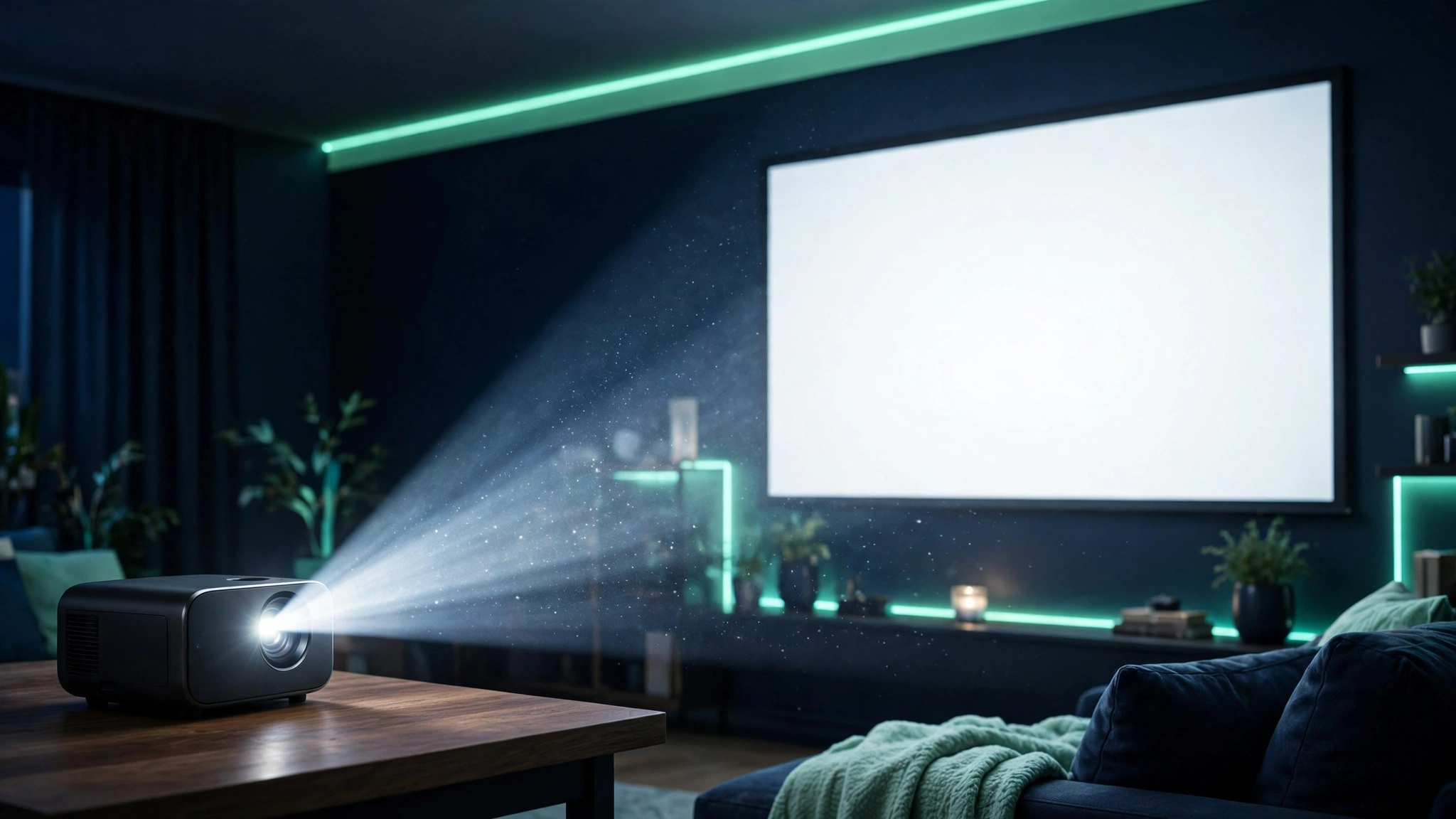
Before the picks, a quick note on how to read them. Brightness matters more than resolution in a bright room: look for 2,000 to 3,000 ANSI lumens for a living room with some daylight, and more if you cannot control the light at all. Input lag matters more than anything else for gaming — under 25ms in game mode is the target, and the best gaming projectors now reach 4ms. And light source matters for running costs: laser projectors last around 20,000 hours or more with no bulb changes, while lamp projectors are cheaper upfront but need a replacement bulb eventually. Keep those three numbers in mind and the list below will make sense.
1. Hisense C2 Ultra — Best Projector Overall
The Hisense C2 Ultra is the best all-round projector you can buy in 2026, and it earned that title the hard way: in Tom’s Guide testing it measured brighter than its own rating, hitting 3,231 lumens, with strong built-in sound that means you may not need external speakers at all. It is a compact laser projector with 4K resolution, rich colour and a design that fits a living room rather than demanding a dedicated theater.
It is also a serious gaming projector. The C2 Ultra is Designed for Xbox, with input lag as low as 12ms and support for high refresh rates, so it handles fast-paced games as well as it handles films. The built-in base swivels 360 degrees and tilts 135 degrees, which makes it easy to point at a wall, a ceiling or a screen without fiddling with mounts. For most buyers — a living room, a mix of movies, sport and gaming, no dedicated dark room — this is the one to buy first.
2. Anker Nebula X1 — Best Mainstream Projector
Engadget’s pick for the best mainstream projector of 2026 is the Anker Nebula X1, and it shows how far the mainstream has come. The triple-laser engine and dynamic iris deliver 3,500 lumens of brightness, excellent contrast and accurate colour, with Dolby Vision HDR support that was once reserved for projectors costing far more. The image holds up to 250 inches, and the built-in smart system means it works out of the box with no extra streaming stick.
The X1 is the right choice if you want one projector that does everything well without demanding that you learn home-theater jargon. It is bright enough for evening viewing with the lights low, sharp enough for 4K films, and its sound system is genuinely good rather than an afterthought. If the Hisense C2 Ultra is the enthusiast’s all-rounder, the Nebula X1 is the mainstream buy — and the gap between them is smaller than the price difference suggests.
3. ViewSonic PX701-4K — Best Projector for Gaming
Gamers care about one thing that film fans ignore: input lag. The ViewSonic PX701-4K is built around it, and Engadget named it the best gaming projector of 2026. It supports 240Hz refresh rates with just 4.2ms of lag at 1080p, so what you press shows up on screen fast enough for competitive play. At 4K it still performs well, and the brightness is strong enough for a room with some ambient light.
The trade-off is that this is a projector optimised for speed rather than cinema-grade colour, so if your priority is film-night picture quality above all else, the Hisense or the Epson below will serve you better. But if your projector is mostly connected to a PS5, an Xbox or a PC — and especially if you play competitive shooters or fast action games — the PX701-4K is the pick that will actually make a difference to how games feel. A cheaper lamp-based alternative worth knowing about is the BenQ TK700, which offers low input lag at high refresh rates for around $1,300, though its lamp will eventually need replacing.
4. Epson Home Cinema 980 — Best Budget Projector
The Epson Home Cinema 980 is the budget pick that proves you do not need 4K to enjoy a big screen. It is a 1080p three-chip LCD projector rated at 4,000 lumens at its brightest settings — enough for use in ambient light, which is exactly where most budget projectors fail. The three-chip system delivers sharp, bright video for movies, sport and gaming, and Epson’s colour accuracy at this price is consistently praised in reviews.
Who is this for? Anyone who wants the big-screen experience for the price of a mid-range TV, and who is willing to accept 1080p in exchange for brightness and reliability. It is also a good first projector: if you have never owned one, the 980 lets you find out whether the projector lifestyle suits your room before you spend several times more on a 4K laser model. Pair it with a decent screen or even a plain white wall, and the result will surprise you.
5. Epson LS11000 — Best Premium Projector for a Dark Room
If you have a room you can darken properly, the Epson LS11000 is the premium pick. It is a long-throw 4K laser projector with honest colour, instant-on performance and a light source rated for roughly 20,000 hours or more — no bulb swaps, ever. At around $3,500 it is a serious purchase, but it is also the projector that reviewers keep recommending year after year for dedicated home theaters, and 2026 is no exception.
The LS11000’s strength is that it does the fundamentals better than anything near its price: deep blacks, accurate colour, a sharp 4K image and enough brightness for a large screen in a controlled room. It will not win a brightness contest against the triple-laser models, and it is not a gaming-first projector, but for films in a dark room it remains the benchmark. Buy this one if you are building a theater, not if you are replacing a living-room TV.
6. Hisense PX3-PRO — Best Ultra Short Throw Projector
Ultra short throw projectors sit inches from the wall and throw a huge image upward, which means no ceiling mount, no long cable runs and no one walking through the beam. The Hisense PX3-PRO is the best of the breed in 2026: a triple-laser UST projector delivering 3,000 ANSI lumens and a 4K image at up to 120Hz, with support for HDR10+ and Dolby Vision. For gamers, it is the first UST projector designed for Xbox, with high refresh rates and HDMI 2.1 inputs.
UST projectors work best with a dedicated ambient-light-rejecting screen, which adds to the cost — budget for one if you buy this. But the result is the closest thing to a TV replacement that projectors offer: a 100-inch-plus image from a box that sits on your TV stand. If you want a projector but refuse to deal with mounts and throw distances, this is your category, and the PX3-PRO is the pick.
7. Samsung The Freestyle 2nd Gen — Best Portable Projector
The Samsung The Freestyle 2nd Gen is the projector for people who do not have a theater room, or even a fixed wall. It is small, light and portable, with a built-in Gaming Hub, HDR support and a design that lets you point it at a wall, a ceiling or a sheet in the garden. At around $498 it is also the cheapest way to get a genuinely good portable projector from a major brand.
Be realistic about what it is: a 1080p portable projector will not match the brightness or sharpness of the laser models above, and it needs a dark room to shine. But for a bedroom, a small apartment, a camping trip or a garden movie night, the Freestyle is the one you will actually use — because the projector you carry is worth more than the one bolted to the ceiling of a room you never sit in. If you already have a big TV, compare it with our best smart TVs of 2026 to decide whether a portable projector is the better second screen for your home.
How to Choose the Right Projector
Start with your room, not the spec sheet. A dark room rewards contrast and colour accuracy, so the Epson LS11000 or a laser model like the Hisense C2 Ultra will shine. A bright living room demands lumens above all else — 2,000 to 3,000 ANSI lumens as a minimum — which points to the Epson 980 or the Nebula X1. A small room or a rental where you cannot mount anything points to an ultra short throw model or a portable like the Freestyle.
Next, decide what you will watch most. Films reward contrast, colour and HDR support. Gaming rewards low input lag and high refresh rates, so check the lag figures at the resolution you will actually play at — a projector that is fast at 1080p may be slower at 4K. Sport rewards brightness and motion handling. There is no projector that is best at everything, which is why the list above is organised by use case rather than by price.
Finally, budget for the extras. A screen makes a real difference — even a basic fixed-frame screen beats a painted wall. Sound matters too: the built-in speakers on the Hisense and Anker models are good, but a soundbar will transform the experience on any projector. And remember the running costs: laser projectors need no bulb changes, while lamp models like the BenQ TK700 will need a replacement bulb after a few thousand hours. Add those costs to the sticker price before you decide.
One more thing worth knowing: the difference between a good TV and a good projector is no longer picture quality at the same size — it is size itself. A 65-inch TV is a big TV. A 100-inch projector image is a different experience entirely, and it is the reason projectors keep selling even as TVs get cheaper. If you have the wall space, the projector wins on immersion every time. Our OLED vs QLED vs Mini-LED guide covers the TV side if you are still deciding between the two.
The Bottom Line
The best projectors 2026 offers start with the Hisense C2 Ultra as the best all-rounder, the Anker Nebula X1 as the best mainstream buy, and the ViewSonic PX701-4K as the best for gaming. The Epson Home Cinema 980 is the budget pick that makes the big screen affordable, the Epson LS11000 is the premium choice for a dark room, the Hisense PX3-PRO is the best ultra short throw, and the Samsung Freestyle 2nd Gen is the portable to take anywhere. Match the projector to your room and to what you watch most, budget for a screen and sound, and buy the laser model if you can stretch to it — no bulb changes for 20,000 hours is worth more than it sounds. Prices move around, so always confirm the current price on the product page before you buy.