
Final Fantasy Resonance: Release Date, Platforms, Gameplay and Everything to Know
Final Fantasy Resonance launches on October 22, 2026, and it might be the most interesting Final Fantasy release of the year for a simple reason: it is the series’ first HD-2D game. Square Enix and co-developer Lancarse have rebuilt the first story arc of the mobile game Final Fantasy Brave Exvius as a full console RPG, with pixel-art characters, layered 3D environments, turn-based combat, and a summoning system that lets iconic Final Fantasy heroes fight alongside you.
Whether you played Brave Exvius for years or have never touched it, here is everything confirmed about Final Fantasy Resonance: its release date, platforms, story, combat, Visions system, editions and prices, the free demo, and whether it deserves a spot on your October playlist.

Final Fantasy Resonance Release Date and Platforms
Final Fantasy Resonance releases worldwide on Thursday, October 22, 2026. It launches simultaneously on PlayStation 5, Xbox Series X|S, Nintendo Switch, Nintendo Switch 2, and Windows PC via Steam and Xbox on PC. Square Enix has also confirmed the game is Steam Deck Verified at launch, which is good news for handheld PC players.
That breadth matters. Many HD-2D games launch on a narrower set of platforms, but Resonance is day one on essentially everything current, including both Switch generations. If you own a Switch 2, a PS5, an Xbox, or a PC, you are covered — no waiting for a port, no platform-exclusive delay. A couple of smaller outlets have listed October 23, but Square Enix and the overwhelming majority of coverage point to October 22, so plan around that date and double-check your local store page near launch for exact unlock times.
What Kind of Game Is Final Fantasy Resonance?
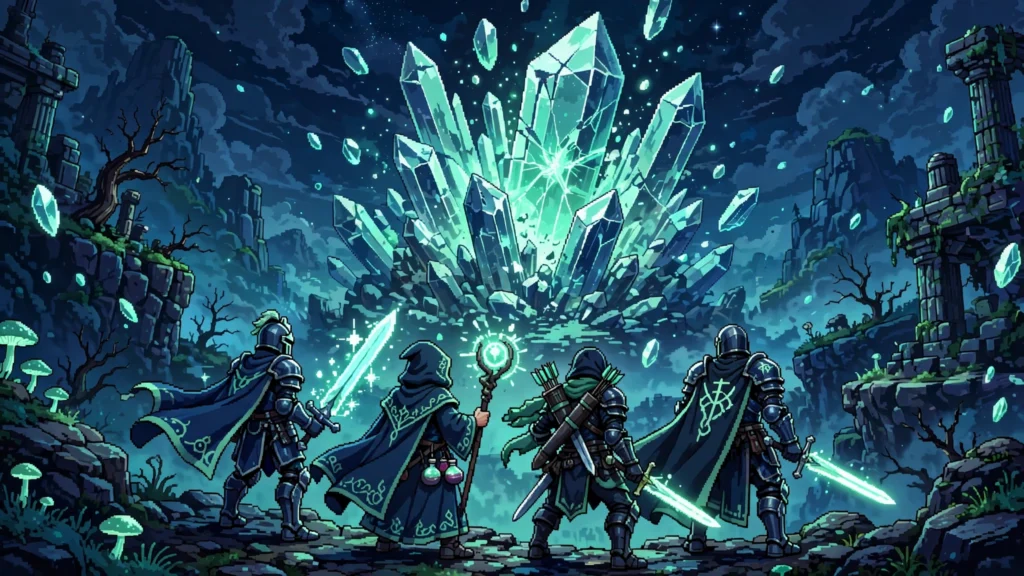
Final Fantasy Resonance is a single-player, turn-based JRPG built in the HD-2D style — detailed pixel-art characters set against layered, modern 3D environments with dynamic lighting and cinematic camera work. Square Enix describes the visual concept with a simple question: what if Final Fantasy had continued to push the limits of pixel art? The answer is a game that looks retro and modern at the same time, with cutscenes that render 3DCG in pixel form for a distinctive, almost hand-crafted feel.
The story adapts the first season of Final Fantasy Brave Exvius, but Square Enix stresses this is not a straight port. The console version has been extensively rebuilt and reimagined as a full-fledged console-quality RPG, with a scope and polish beyond the mobile original. You do not need to have played Brave Exvius to follow it; Resonance is designed as a standalone story.
You play in the world of Lapis, in the Kingdom of Grandshelt, a land blessed by the power of crystals. Rain, commander of the airship squadron, and his childhood friend and deputy Lasswell are sent to investigate the Earth Shrine, where the magical barrier protecting it has weakened. Inside, they meet a mysterious man in black armor, are defeated, and watch the Earth Crystal shatter before their eyes.
Returning to a Grandshelt under attack, they rescue the king and set out with a mysterious girl named Fina to protect the world’s remaining crystals from the Veritas of the Dark. Classic Final Fantasy ingredients — crystals, airships, Espers, Moogles, and a world-ending threat — are all here, in a story built for newcomers and veterans alike.
How Combat Works: Timeline Turns, Stagger, and Resonance Attacks
Combat in Final Fantasy Resonance is traditional turn-based combat with a timeline twist, not the Active Time Battle system of older Final Fantasy games. A timeline shows the upcoming turn order of allies and enemies, so you can plan around who acts next rather than reacting in real time.
The core loop revolves around the stagger system. Enemies have a stagger gauge, and hitting their elemental weaknesses depletes it faster. Deplete it fully and the enemy staggers: it cannot act on its turn, its defense drops, and the character who staggered it gets an extra action at the end of the turn. Stagger every enemy on the field and you trigger a sweeping stagger, granting the whole party an extra action. That creates a satisfying risk-and-reward rhythm: play safe and chip away, or target weaknesses aggressively to chain bonus turns and unleash high-damage Resonance team assaults.
This is a system that rewards knowledge over brute force. Learning enemy weaknesses, managing the timeline, and timing your big attacks for staggered windows will matter far more than simply grinding levels. Players who enjoy tactical RPGs should feel at home, while players new to the genre get a clear, readable system: hit the weakness, break the gauge, cash in the bonus.
The Visions System: Summoning Final Fantasy Legends
The headline feature for longtime fans is Visions. Visions are crystallized essences of iconic characters from across the Final Fantasy series, and you can equip them to party members to grant new abilities, stat boosts, and special attacks. Cloud from Final Fantasy VII, for example, grants enhanced physical attacks and lightning magic, and other legacy heroes appear in the same way. Learned abilities can be mixed across Visions within a cost limit, giving the system a job-system flavor: build your party the way you want, not the way a fixed class list dictates.
Visions are found in the world and equipped strategically, so exploration pays off in combat options, not just loot. The game also includes Espers as powerful summons, airship travel that unlocks areas you cannot reach on foot, and — in a treat for veterans — Sephiroth appears as a super-boss challenge players can seek out for a special reward. That is a strong signal about who this game is for: it respects the series’ history without requiring you to know it.
Music, Presentation, and the Free Demo
The soundtrack is composed by Noriyasu Agematsu and includes 120 tracks in total, 33 of them new alongside music from Brave Exvius. A four-CD original soundtrack release follows on October 28, with pre-orders already open in Japan. For a series famous for its music, that track count is a serious commitment, and early trailers suggest the score leans into the nostalgic, melodic style the HD-2D visuals promise.
Undecided? A free demo has been available since September 3, 2026, covering the story through the end of Chapter 1 — roughly three to five hours — and your save data carries over to the full game. That is one of the most generous demos of the year, and it is the smartest way to decide: play the opening, test the stagger system, see whether the HD-2D style clicks for you, and carry your progress forward if you buy. If you are choosing between October releases, the demo removes almost all of the guesswork.
Final Fantasy Resonance Editions and Prices
Final Fantasy Resonance is available in a standard physical and digital edition for $59.99. A $69.99 Digital Deluxe Edition includes a selection of in-game items. For collectors, a $209.99 Collector’s Edition contains the base game, the Digital Deluxe bonuses, an art book, the CD soundtrack, an acrylic block set, and a unique Final Fantasy Trading Card Game promotional card.
Our advice: most players should start with the standard edition, or the demo first. The Digital Deluxe in-game items are nice but not essential, and the Collector’s Edition is for dedicated fans who want the physical extras. Prices and contents can vary by region and retailer, so confirm your local store listing before pre-ordering — especially for the Collector’s Edition, which is likely to sell through quickly.
Is Final Fantasy Resonance Worth Playing?
Final Fantasy Resonance is shaping up as one of October’s best bets for RPG fans, and for three reasons. First, the HD-2D presentation is genuinely new for Final Fantasy, and it suits a crystals-and-airships story better than a photorealistic look would. Second, the combat system is readable and tactical without being punishing — stagger and timeline mechanics give you real decisions every turn. Third, the demo is long, free, and carries your save forward, so there is almost no risk in trying it.
The main caveat is expectations. This is a rebuilt mobile story, not a brand-new mainline Final Fantasy, and its pacing and structure will reflect those roots. If you want a sprawling, open-world epic, look elsewhere this month. If you want a focused, beautiful, turn-based JRPG with a classic heart and modern polish, Resonance is exactly that — and its October 22 launch, just before the Halloween rush, makes it an ideal autumn RPG.
For more October gaming, check out our coverage of other big releases this month, including Castlevania: Belmont’s Curse and our roundup of the best free-to-play games worth playing in 2026. And if you are upgrading your setup before launch, our guide to the best gaming monitors of 2026 will help the HD-2D visuals shine.
The Bottom Line
Final Fantasy Resonance launches October 22, 2026 on PS5, Xbox Series X|S, Switch, Switch 2, and PC for $59.99, with a free Chapter 1 demo available now and save data that carries over. It is Final Fantasy’s first HD-2D game, a turn-based RPG about shattered crystals, stagger-driven combat, and summoning legends as Visions. Try the demo this week — three to five hours is enough to know whether Lapis is your next adventure, and if it is, you will be ready the moment the full game unlocks.