
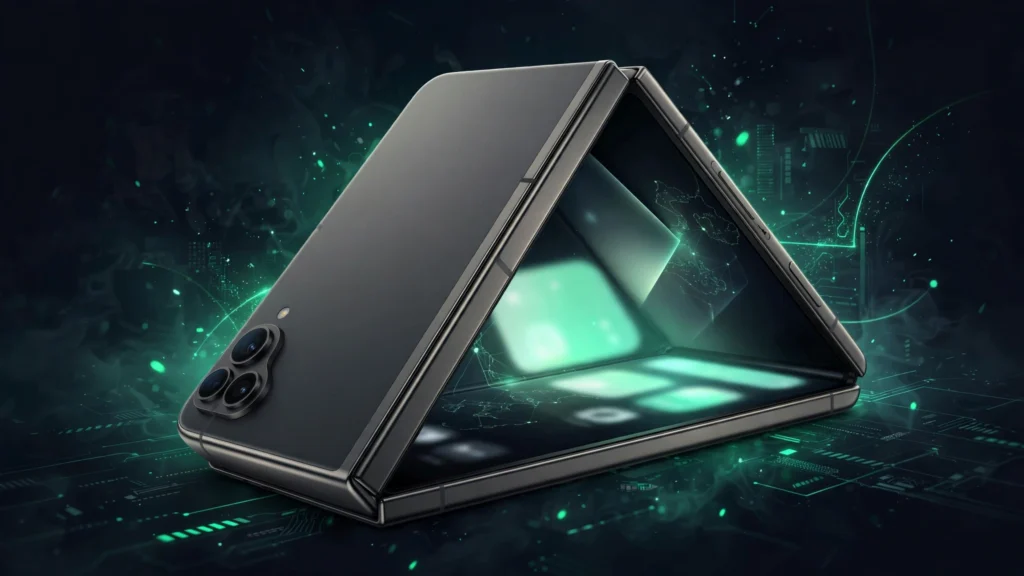
iPhone Duo: Apple’s $1,999 Foldable Sells Out Hours After Pre-Orders Open
Apple has entered the foldable race at last, and the market responded instantly. The iPhone Duo, Apple’s first foldable iPhone and the most expensive iPhone the company has ever sold, opened for pre-orders on Friday, October 16, 2026 — and within an hour, delivery estimates had slipped into late January 2027. Launch-day pickup inventory sold out just as fast. Apple described the demand as “nothing short of extraordinary,” and early reports suggest the Duo could be the most supply-constrained iPhone launch in nearly a decade.
At a starting price of $1,999, the iPhone Duo is not a phone for everyone. But that’s exactly the point: it’s a statement product — Apple’s bet that a dramatic new form factor can convince its highest-spending customers to pay dramatically more. Here’s everything we know about the iPhone Duo: the specs, the prices, the sold-out pre-order chaos, the scalpers flipping them for $5,000, and whether you should try to buy one at all.
What Is the iPhone Duo?
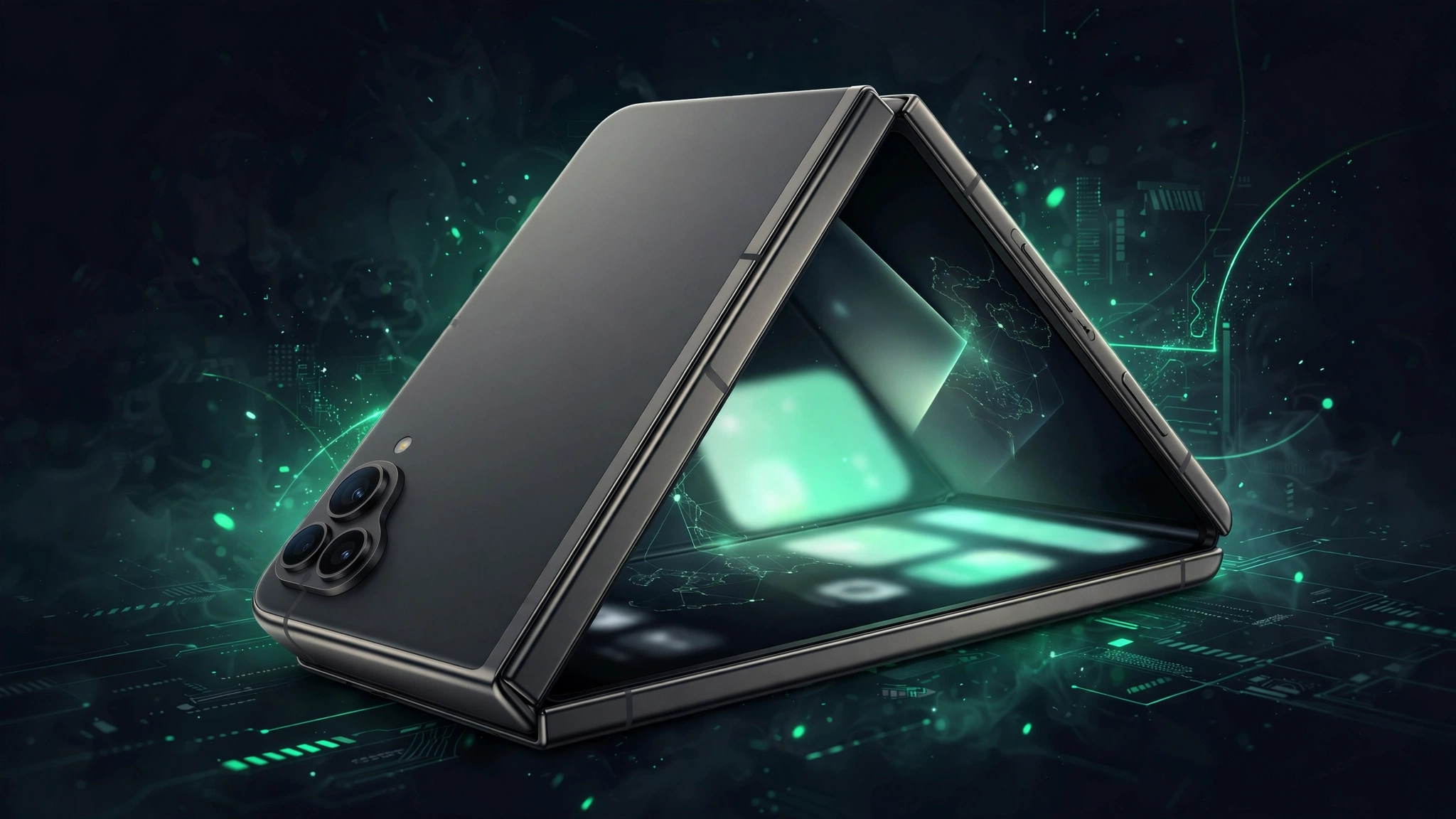
Unveiled on September 9, 2026, by Apple’s new CEO John Ternus — who called it “the most transformational change to iPhone since the original” — the iPhone Duo is Apple’s first folding device, and arguably the most dramatic iPhone redesign in the product’s nearly 20-year history. Folded, it’s roughly the size of a passport with a 5.4-inch outer display for quick tasks. Unfolded, it reveals a 7.6-inch Super Retina XDR inner display that behaves more like an iPad than a phone.
The headline specs confirm Apple didn’t cut corners:
- Inner display: 7.6-inch Super Retina XDR foldable OLED
- Outer display: 5.4-inch cover screen
- Chip: A20 Pro — the same silicon powering the iPhone 18 Pro models
- Battery: Dual-battery system split across both halves
- Frame: Grade 5 titanium
- Software: iOS 27 with fold-aware features including Split View — run two apps side by side, or two windows of the same site at once
- Biometrics: Touch ID built into the side button (no Face ID on the foldable)
- SIM: eSIM-only worldwide
- Colors: Star White and Night Sky
Before the Duo, foldables were a category Samsung and Google built over several generations — Samsung’s Galaxy Z Fold line, Google’s Pixel Fold series. Apple arriving late isn’t unusual for the company (it waited on 5G, on large screens, on always-on displays), and its pitch is familiar: Apple enters late, but enters with scale. With the iPhone Duo starting at $1,999, though, scale is one thing this launch does not have yet.
iPhone Duo Price: The Most Expensive iPhone Ever
Let’s talk numbers, because the iPhone Duo’s pricing is the story as much as the fold itself:
- 256GB: $1,999
- 512GB: $2,199
- 1TB: $2,599
- 2TB: $3,199
That’s double the starting price of a standard flagship, and it makes the Duo Apple’s priciest mainstream iPhone configuration at launch by a wide margin. For context, our iPhone vs Android 2026 comparison put the entry price of a proper 2026 flagship at $799–$900 — the Duo costs more than two flagships combined. Apple is clearly positioning this as an aspirational device first, a mass product later.
Interestingly, IDC data cited during launch coverage puts the market opportunity in perspective: foldables are just over 2% of global smartphone units but nearly 7% of industry revenue — the most lucrative form factor per unit in the business. IDC expects foldables to reach 10% of industry revenue by 2030 while still being only ~3% of units. Apple’s global senior research director Nabila Popal told CNBC the Duo is “fast becoming an aspirational foldable” — the technology isn’t new, but Apple bringing it to its enormous installed base is.
The Sold-Out Pre-Order: What Actually Happened
Pre-orders opened at 8 a.m. ET (5 a.m. PT) on Friday, October 16, 2026. By all accounts, the inventory was gone almost immediately:
- Within an hour, online delivery estimates for every configuration had slipped into late January 2027 — past the planned October 23 retail availability by months.
- Launch-day pickup inventory at Apple Stores sold out.
- Apple released a statement calling pre-order demand “nothing short of extraordinary” and said it is “working hard to get this revolutionary new product into customers’ hands as quickly as possible.”
The device is scheduled to hit shelves on October 23 in the U.S. and more than 70 other countries and regions — Apple typically reserves some units for in-store sales, so anyone willing to queue on launch day may still get lucky. But with online estimates already three months deep, expectations for walk-in stock should be modest.
Analyst Dan Ives told CBS News he expects Apple to sell roughly 10 million iPhone Duo units in the coming quarters — an aggressive number for a first-generation foldable at this price, and a clear signal that Wall Street believes the demand is real, not manufactured scarcity. Apple itself had warned customers from the start that supply would be limited, running a “Get Ready” pre-registration that let buyers pick color and storage, confirm carrier status, and save payment details before pre-orders opened.
Scalpers Are Already Selling Pre-Orders for $5,000
Where Apple sees extraordinary demand, eBay sees a market. With shipping estimates pushed to January 2027, a fast-moving secondary market has sprung up around “confirmed pre-order” listings — buyers flipping their order confirmations before the devices even exist in their hands.
The numbers are eye-watering: a 2TB Night Sky model (Apple retail $3,199) sold for $4,999.99 — roughly an $1,800 premium over retail. A 1TB Night Sky “confirmed pre-order” (retail $2,599) sold for $4,400. At least four units reportedly sold at the $4,999 price point, with many completed sales starting above $3,000. Even base 256GB models (retail $1,999) are trading in the $2,700–$3,800 range.
Our advice: don’t buy a pre-order confirmation from a stranger. Apart from the markup, you’re trusting a seller to actually transfer the device when it arrives months from now — a transaction with almost no buyer protection. If the Duo is worth having, it’s worth waiting for at retail price.
iOS 27’s Fold-Aware Software: What the Big Screen Actually Does
Hardware is only half the foldable story — software is where most first-generation foldables stumble. Apple is shipping iOS 27 with fold-aware features built specifically for the Duo, and the headline is Split View: run two different apps side by side, or two windows of the same website simultaneously, on the 7.6-inch inner display. For productivity — email next to a document, maps next to messages, a spreadsheet next to a video call — that’s a genuine laptop-lite use case in your pocket.
The open question is third-party app support. Apple’s own apps will be optimized on day one, but the Duo’s success as a “phone that becomes a tablet” depends on developers updating their apps for the folding canvas. Apple’s enormous developer ecosystem is its biggest advantage here over Samsung and Google: when Apple tells developers a new form factor matters, they listen. Expect the app story to improve fast in the first six months — another reason patient buyers may be rewarded.
Should You Buy the iPhone Duo?
Honestly? For most people, no — at least not yet. First-generation foldables from every manufacturer have shipped with trade-offs: creases, hinge durability questions, battery life that’s good-but-not-great, and app ecosystems still adapting. The Duo’s Touch ID-only authentication and eSIM-only design are also notable departures from the iPhone mainstream that may matter depending on your carrier and habits.
The people the iPhone Duo is genuinely for right now: Apple loyalists with the budget, early adopters who want the newest form factor first, and professionals who can use a 7.6-inch Split View workspace in their pocket. Everyone else gets a better deal waiting for reviews — and for the inevitable supply catch-up that will cool prices and kill the scalper market.
One practical tip for prospective upgraders: if you do land one, back up your current phone before you migrate — at these storage tiers and prices, you don’t want to risk a botched transfer.
What the iPhone Duo Means for the Foldable Market
Here’s the bigger picture: foldables have existed for years without becoming mainstream, mostly because the biggest phone brand on Earth stayed out. Samsung and Google did the hard work of normalizing the category; Apple is now doing what it does best — arriving late with a premium product and an enormous customer base, and forcing the entire market to take the form factor seriously.
That has knock-on effects worth watching. Android foldables will likely get cheaper and more competitive as Apple legitimizes the category. Accessory and app developers will suddenly care about fold-aware design. And if the Duo’s demand holds, Apple could bring the price down in future generations the way it has with every premium iPhone feature it’s ever introduced.
The iPhone Duo sold out in an hour at $1,999. Whether that’s a triumph of design or a triumph of brand, it’s a signal: the foldable era of the smartphone has officially begun.