

Apple’s November 2026 Lineup: 8 New Products, Release Dates and What to Buy
Apple November 2026 products are arriving in waves, not all at once — and if you are shopping for a Mac, an iPad, or a smart-home upgrade this autumn, the release calendar matters as much as the specs. Following Apple’s “Pro and Tell” event on October 28, eight new products are now open for pre-order or heading to stores, with staggered release dates on October 30, November 6, and November 13, 2026. This guide explains what each product is, who it is for, and which ones are actually worth buying now versus waiting on.
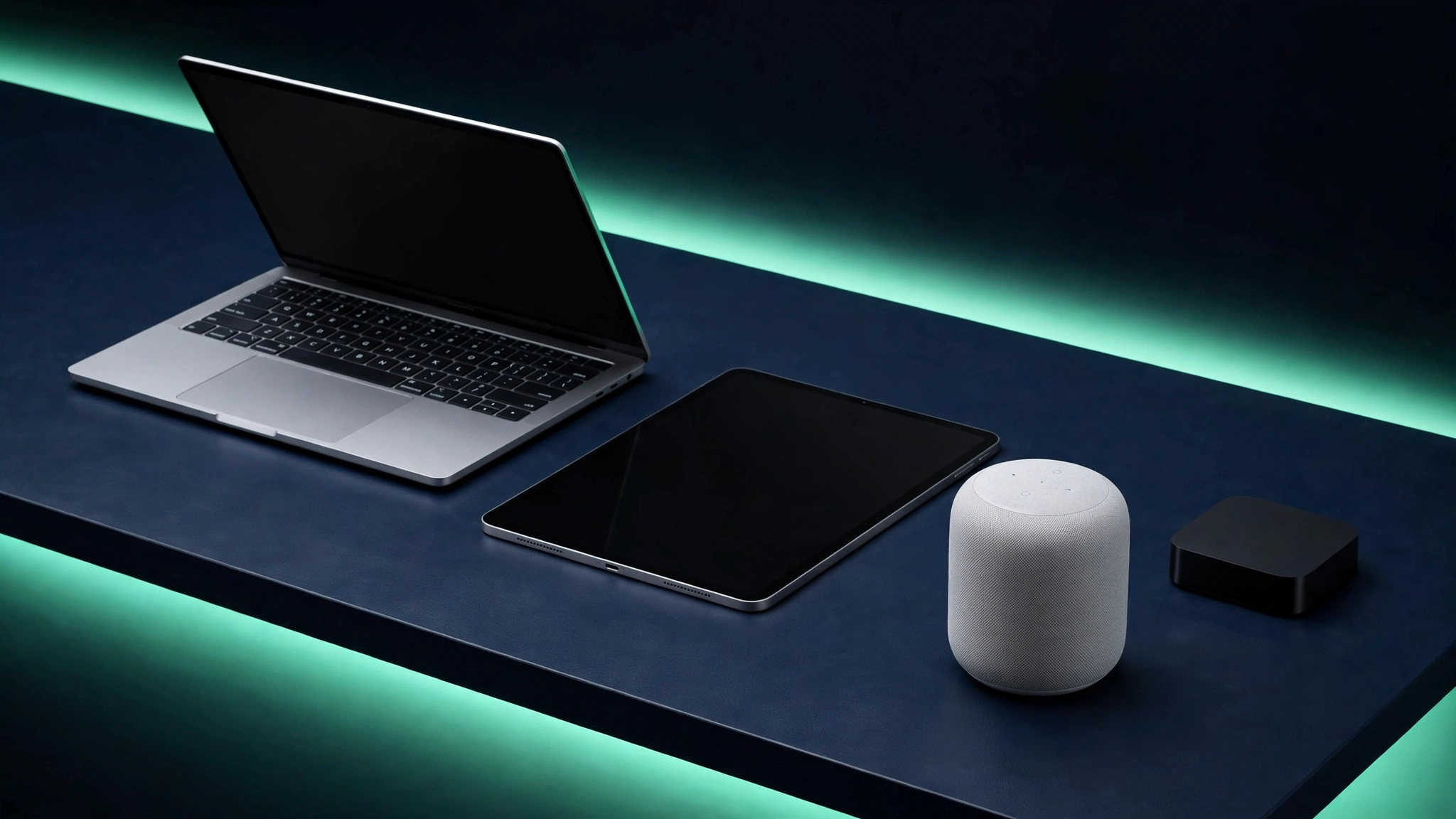
The headline story is display technology. Apple is bringing OLED to more of its lineup at once: the premium MacBook Pro models and the iPad mini both move to OLED, while the entry-level MacBook Pro and the iMac get the new M6 chip. On the home side, the long-awaited Apple HomeView smart home hub finally has a date, alongside a second-generation HomePod mini and a fourth-generation Apple TV 4K. In short, this is one of Apple’s biggest single-season refreshes in years.
Apple November 2026 products: the full list and release dates
Here is the lineup as it stands, based on Apple’s pre-order pages and reporting of the staggered schedule. The HomePod mini 2 reaches customers first, on October 30. Five Mac and iPad models follow on November 6. Apple HomeView and the fourth-generation Apple TV 4K arrive on November 13.
The eight products are: the 14-inch MacBook Pro with M6, the 14-inch MacBook Pro with OLED touchscreen, the 16-inch MacBook Pro with OLED touchscreen, the M6 iMac, the OLED iPad mini, the HomePod mini 2, Apple HomeView, and the fourth-generation Apple TV 4K. Five of those opened for pre-order on October 28, while the other three were already accepting orders ahead of their launches. If you are buying for the holidays, the November 6 and November 13 dates still leave comfortable delivery time — but popular configurations, especially OLED MacBook Pros, are the ones most likely to slip.
The OLED MacBook Pro models are the stars of the show
Apple’s first touchscreen MacBook Pro is the product everyone will be talking about, and we covered the announcement itself in detail in our report on Apple’s first touchscreen MacBook Pro with OLED and Dynamic Island. The 14-inch and 16-inch OLED models combine an OLED display with a touchscreen and Dynamic Island, a combination Apple resisted for years. For creative professionals, the OLED panel means deeper blacks, higher contrast, and more accurate colour for photo and video work. For everyone else, the touchscreen is the real lifestyle change: scrolling, tapping, and annotating directly on a Mac display for the first time.
Who should buy one? If your current MacBook Pro is from 2021 or earlier, or you work in video, photography, or design, the OLED models are the meaningful upgrade this cycle. If you mainly browse, write, and stream, the standard M6 MacBook Pro below will feel just as fast for far less money. Do not buy an OLED MacBook Pro purely for the touchscreen novelty unless you know your workflow benefits from touch — it is a premium feature with a premium price.
The M6 MacBook Pro and M6 iMac: the sensible upgrades
The 14-inch MacBook Pro with the M6 chip and the M6 iMac are the quieter, smarter buys for most people. The M6 chip brings the expected generational gains in CPU and GPU performance and efficiency, which in practice means faster exports, smoother multitasking, and better battery life on the laptop. The iMac remains the best all-in-one for a family room, a home office, or a student desk: one cable, a beautiful display, and no tower to hide.
Our advice is simple. Students, office workers, and home users should start with the M6 models and spend the savings on more storage or memory, which you cannot upgrade later. Power users with heavy rendering, 3D, or large video timelines should look at the OLED Pro models or a higher-tier configuration instead. Either way, buy the storage you will need in three years, not the storage that feels adequate today.
OLED iPad mini: a small tablet with a big display upgrade
The OLED iPad mini is the sleeper hit among Apple November 2026 products. The iPad mini has always been loved by readers, travellers, pilots, and anyone who wants a tablet that fits in a jacket pocket or a small bag. OLED transforms it: richer colours, true blacks for reading and video at night, and better HDR for streaming. Combined with Apple Pencil support, it becomes a genuinely excellent note-taking and sketching device, not just a consumption tablet.
It is not a laptop replacement, and Apple does not pretend it is. But as a second device — for reading, annotating PDFs, watching video on a plane, or controlling smart-home gear — the OLED iPad mini is now far easier to recommend than before. If you already own a recent iPad mini and only browse on it, wait. If your mini is several generations old, or you have never owned one, this is the version to buy.
HomePod mini 2, Apple HomeView, and Apple TV 4K: the home trio
The smart-home side of Apple November 2026 products deserves attention, especially because the three devices work best together. The HomePod mini 2, available from October 30, is the affordable entry point: better sound and smarter Siri in a small speaker you can put in every room. Apple HomeView, arriving November 13, is the hub that ties the home together — a dedicated smart-home controller with a display, designed to manage lights, locks, cameras, and routines without reaching for your phone.
The fourth-generation Apple TV 4K, also out November 13, completes the set as the living-room media and HomeKit hub. If you are already invested in HomeKit, this trio is a coherent upgrade path: HomePod mini 2 for rooms, HomeView for control, Apple TV 4K for the television. If you are not in the Apple home ecosystem, do not buy all three at once — start with the HomePod mini 2, see how much you use voice and automation, and expand from there. Readers considering a full smart-home setup should also revisit our earlier explainer on what Apple HomeView is and what it does before deciding.
What to buy, what to skip, and what to wait for
Buy now if you need a machine: the M6 MacBook Pro and M6 iMac are safe, long-lived purchases, and the HomePod mini 2 is an easy gift or room upgrade. Buy the OLED MacBook Pro if you do creative work or you have been waiting specifically for a touchscreen Mac — this is the generation you waited for. Consider the OLED iPad mini if you read, travel, or annotate heavily.
Wait if your current device still does everything you need, or if you want to see real-world reviews of the touchscreen MacBook Pro’s battery life and software support. First-generation features, even from Apple, benefit from a few weeks of independent testing. Also wait if you are unsure about the smart-home trio: HomeView’s real value will become clearer once reviewers test it with a wide range of third-party accessories, not just Apple’s own gear.
One practical tip applies to every product here: check the return window and delivery estimate before you order, especially for holiday gifts. Staggered releases mean a November 6 or November 13 product ordered late could still arrive in time, but a slipped configuration might not. Order the exact configuration you want early, and do not assume every colour or storage option ships on the same day.
How Apple November 2026 products fit the bigger 2026 story
Apple’s 2026 hardware story has been about displays and intelligence moving together: OLED spreading across Mac and iPad, Apple Intelligence features maturing, and the home becoming a first-class platform rather than an accessory business. Apple November 2026 products are the payoff for that strategy. They are not a revolution in any single device, but together they make Apple’s ecosystem feel more consistent — the same display quality, the same chip generation, and the same home controls across the devices you touch every day.
For buyers, that consistency is good news. It means accessories, chargers, and software features carry across devices more cleanly, and it means a purchase today is less likely to feel outdated in six months. The risk, as always, is paying for features you will never use. Match the product to your actual workflow, not to the launch hype, and this lineup has something genuinely good for almost every kind of Apple user.
Conclusion
Apple November 2026 products reward careful shoppers. The OLED MacBook Pros are the flagship story, the M6 Mac and iMac are the value picks, the OLED iPad mini is the delightful surprise, and the home trio finally gives Apple a complete smart-home pitch. Note the dates — October 30 for HomePod mini 2, November 6 for the Macs and iPad mini, November 13 for HomeView and Apple TV 4K — order early for the configurations you want, and buy for the work you actually do. We will update this guide as reviews land and as Apple confirms pricing and availability in more regions, so check back before you check out. For official specifications, see Apple’s official website.
We will keep tracking Apple November 2026 products as reviews and pricing updates arrive.
Pingback: Apple Intelligence China Launch: Qwen, iOS 27.3 Dates