

Best Drones 2026: 7 Top Picks for Every Budget
Choosing the best drones in 2026 is easier than it has ever been, and also more confusing than it should be. The good news is that almost every major drone on sale today takes excellent photos and video, flies stably, and is far easier to control than the drones of a few years ago. The confusing part is the range: prices run from under $200 to well over $2,000, cameras range from basic 4K to professional multi-camera systems, and weight determines whether you need to register your drone at all. This guide cuts through that confusion with seven picks for real uses, from a first drone for a beginner to a professional tool for commercial work, with honest advice about who each drone is actually for.
Before you buy, it helps to think about how you will use a drone, not just how impressive the specifications look. A travel drone needs to be light and portable. A photography drone needs a large sensor and good wind resistance. A fun, follow-me drone needs to be simple above all else. Our guide to taking better photos with your phone covers composition basics that apply just as well from the air, and if you are building a travel kit, our picks for the best power banks are worth reading alongside this guide, because extra batteries and charging on the go matter more for drones than for almost any other gadget.
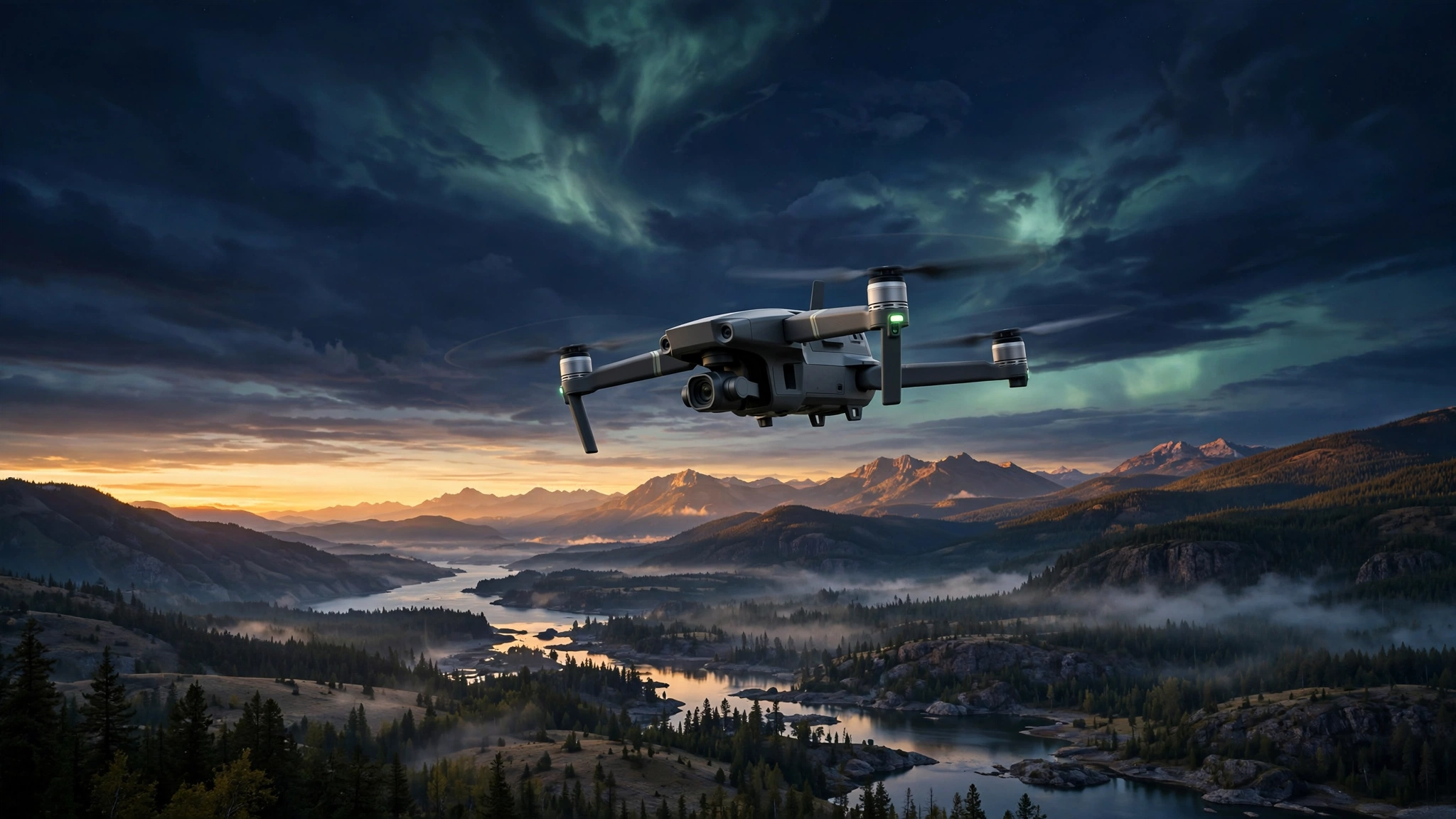
How to Choose the Best Drone in 2026
Start with weight, because it decides the rules you fly under. In the United States, recreational drones under 250 grams do not require FAA registration, which is why the sub-250g class dominates the market. Fly commercially, or fly a heavier drone, and registration and Remote ID requirements come into play. Other countries have their own thresholds, so always check your local rules before you fly, but the principle is universal: a lighter drone is simpler to own, easier to travel with, and less paperwork. That is why so many of our picks sit in or near the sub-250g class.
Next, think about the camera. Sensor size matters more than megapixels. A 1-inch sensor captures noticeably better photos and low-light video than a smaller sensor, especially at dawn, dusk, or indoors. A dual-camera system, with a wide lens and a telephoto lens, gives you framing flexibility without landing and swapping anything. Flight time matters too, but treat manufacturer maximums with caution: wind, temperature, and how aggressively you fly all reduce real flight time, so plan to land with reserve battery rather than flying until the warning appears.
Finally, be honest about your budget and your skill level. Below roughly $200, most drones are toys that fight the wind, drop the video link, and teach you nothing about real flying. Spending a little more gets you GPS stability, a proper camera gimbal, and obstacle avoidance, which are the three features that separate a real drone from a toy. At the other end, professional drones offer image quality most hobbyists will never need. The best drone for you is the one you will actually fly, not the most expensive one you can afford.
1. DJI Mini 4K: Best Budget Drone
The DJI Mini 4K is the cheapest real drone worth buying in 2026, at around $299. It shoots honest 4K video, takes 12-megapixel stills, and flies like a proper GPS drone, which means it holds its position in the air, returns home reliably, and does not drift away in a light breeze. For a beginner, those basics matter far more than advanced features. You learn how a real drone behaves, you get usable footage from your first flights, and you do not spend a fortune to find out whether you enjoy flying.
Its limitations are clear, and they are fair at this price. There is no omnidirectional obstacle avoidance, so you need to fly carefully and keep the drone in sight. The camera sensor is smaller than the Mini 5 Pro’s, so low-light performance is modest. But for learning, for family holidays, and for social media clips in good light, the Mini 4K is genuinely good. If your budget stops at around $300, this is the drone to buy, and you will not feel as though you bought a toy.
2. DJI Neo 2: Best Follow-Me and Selfie Drone
The DJI Neo 2, at around $259, is built for a different job entirely: effortless follow-me clips and selfies without a controller in your hand. It takes off from your palm, follows you as you walk, run, or cycle, and captures short, shareable videos with minimal setup. For creators who want dynamic footage of themselves without learning to fly a traditional drone, it is the easiest option on this list.
The trade-off is range and capability. A follow drone is not a replacement for a camera drone. Flight time is shorter, wind resistance is lower, and you have less manual control. Think of it as a flying camera for personal moments rather than a tool for landscape photography. If your main goal is fun, social content, and a drone you can use without a learning curve, the Neo 2 is excellent. If you want to photograph landscapes or explore from the air, look at the Mini models instead.
3. DJI Mini 5 Pro: Best Drone for Most People
The DJI Mini 5 Pro is our top overall pick for most buyers in 2026, and it is easy to see why. It stays in the sub-250g class, so recreational registration is not required in the US, yet it carries a 1-inch, 50-megapixel sensor with an f/1.8 aperture, shoots up to 4K at 120 frames per second, and offers omnidirectional obstacle avoidance with a low-light sensing mode. Flight time is around 36 minutes on the standard battery and up to about 52 minutes with the larger Battery Plus, although real-world times will be lower.
That combination, small size plus serious camera plus serious safety features, is what makes it special. You can travel with it in a jacket pocket, fly it in places where a heavier drone would be impractical, and still get photos and video that look professional. ActiveTrack 360 follow-me shooting adds creative options for action and travel content. Prices vary by kit, with the base model around $759 in some listings and higher for Fly More combos with extra batteries and a screen controller, so compare kit contents carefully before you buy. For most people, this is the drone you will not outgrow quickly, and it is the one we recommend first.
4. DJI Air 3S: Best Enthusiast Drone
The DJI Air 3S is the sweet spot for enthusiasts who want better image quality and wind stability than a Mini can offer. It pairs a 1-inch, 50-megapixel wide camera with a 48-megapixel, 70mm-equivalent telephoto camera, shoots 4K HDR video, and lists up to 45 minutes of flight time. The dual-camera system is the key feature: you can shoot a wide landscape and then zoom in on a detail without moving the drone, which is invaluable for travel and documentary work.
At 724 grams, the Air 3S is a different proposition from a Mini. It is heavier to carry, it requires registration in the US, and it is more expensive, with base kits around $1,099 and Fly More combos higher. But it holds steadier in wind that would ground a Mini, and the image quality, especially the telephoto option, justifies the step up for serious photographers. If image quality per dollar is your main question, and you do not mind the registration and the extra weight, the Air 3S is the best value enthusiast drone in 2026.
5. DJI Mavic 4 Pro: Best Professional Drone
The DJI Mavic 4 Pro is a professional tool, and it is priced like one, with base models around $2,199 and Fly More combos higher. It offers a 100-megapixel Hasselblad camera system with multiple focal lengths, around 51 minutes of maximum flight time, and the image quality and flexibility needed for commercial photography, filmmaking, and surveying work. For production work where colour science, resolution, and multi-camera flexibility matter, it is in a different league from consumer drones.
For most hobbyists, the Mavic 4 Pro is overkill. It is heavier, at over 1,000 grams, it requires registration and careful compliance, and its capabilities will go unused if you only fly occasionally for fun. Buy it if you earn money from aerial work, if you shoot professional video, or if you specifically need Hasselblad colour and triple-camera flexibility. Otherwise, the Air 3S gives you most of the practical benefit for roughly half the price, and the Mini 5 Pro gives you most of the fun for far less.
6. Potensic ATOM Series: Best Budget Alternative
Not everyone wants a DJI drone, and the Potensic ATOM series is the most credible budget alternative, offering a gimbal-stabilised camera, GPS flight, and a sub-250g design at a lower price than DJI’s Mini models. For buyers who want a real camera drone without paying DJI prices, or who simply prefer a non-DJI option, the ATOM is worth considering. Check availability in your country carefully, because some Potensic models are not sold in all regions, and local support and parts availability matter more for drones than for most gadgets.
The honest caveat is ecosystem. DJI’s app, accessories, spare parts, and community support are more extensive than any rival’s, which matters when you need a replacement propeller, an extra battery, or help troubleshooting. Potensic offers good value, but you trade some of that ecosystem depth for a lower price. If budget is your absolute priority and you are comfortable with a smaller support network, the ATOM series is a sensible choice. If you want the smoothest ownership experience, stick with DJI.
7. DJI Avata 2: Best FPV Drone
First-person view, or FPV, drones are a different kind of flying altogether. The DJI Avata 2 puts you in the cockpit with a headset, letting you fly through gaps, dive, and manoeuvre in ways a camera drone cannot. It is the most fun you can have with a drone, and the footage, fast, immersive, and dramatic, looks unlike anything a traditional drone produces. For creators who want dynamic, cinematic FPV shots, or for pilots who simply love flying, it is a brilliant second drone.
As a first drone, however, FPV is harder to learn and easier to crash. It demands more practice, more attention to safety, and a tolerance for the occasional repair. Most buyers should start with a Mini or Air model, learn the basics, and add an FPV drone later if the flying bug bites. If you already fly and want a new challenge, the Avata 2 is the best entry point into FPV in 2026, with a balance of performance and forgiveness that pure racing drones do not offer.
Drone Rules, Safety, and Accessories You Actually Need
Before your first flight, learn your local rules. In the US, register drones over 250 grams, follow Remote ID requirements, keep the drone in visual line of sight, stay below 400 feet, and never fly near airports, over crowds, or in restricted airspace. Other countries have similar but not identical rules, and some require registration or training even for small drones. A few minutes reading your aviation authority’s guidance will save you fines and, more importantly, keep other people safe.
For accessories, prioritise extra batteries, a proper carrying case, and spare propellers. A single battery gives you roughly half an hour of flying at most, and real sessions need two or three. A Fly More combo, which bundles extra batteries, a charging hub, and a bag, is often better value than buying accessories separately, so compare combo prices before buying a bare drone. Neutral density filters are useful for video in bright light, but they are optional for beginners. A landing pad is cheap and protects your drone from dust and grass.
Finally, practise in an open space before you fly anywhere interesting. Learn how return-to-home works, practise landing manually, and understand what happens when the battery gets low. Most drone accidents happen not because the drone failed, but because the pilot panicked or flew beyond their skill level. A calm first few flights in a park will teach you more than any specification sheet, and they will make every later flight more enjoyable.
Conclusion: Which Drone Should You Buy?
For most people in 2026, the answer is the DJI Mini 5 Pro. It combines a sub-250g design, a 1-inch camera, omnidirectional obstacle avoidance, and strong flight time in a package you can travel with anywhere. If your budget is tight, the DJI Mini 4K at around $299 is the cheapest real drone worth buying. If you want the best image quality for the money and do not mind registration, the DJI Air 3S is the enthusiast sweet spot. Professionals should look at the Mavic 4 Pro, creators who want effortless follow-me clips should look at the Neo 2, and thrill-seekers should consider the Avata 2 as a second drone.
Whatever you choose, buy the drone that matches how you will actually fly, check your local rules, and get extra batteries. The best drone is not the most expensive one; it is the one that leaves the bag, gets flown regularly, and brings back footage you are proud of. In 2026, that drone is easier to find, and more capable, than ever before.
Pingback: Best Action Cameras 2026: 7 Top Picks for Every Adventure