
ChatGPT Gets Visual Ads: OpenAI’s Image Ad Test Explained
For the first time, advertising inside ChatGPT is going visual. OpenAI announced on October 5, 2026 that it will begin testing a new ad format tied to image generation later this month — and it’s the most visually prominent ad placement the chatbot has ever carried. If you’re wondering how ChatGPT visual ads will actually work, who will see them, and what it signals about the business of AI, this guide covers everything we know so far.
Let’s start with the short version: OpenAI is not putting banner ads across ChatGPT. Instead, it’s running a limited test — US only, later in October 2026, with a small initial group of advertisers — in which sponsored product visuals appear alongside images while ChatGPT is generating them. The company frames it as product inspiration rather than interruption. Whether users see it that way will be one of the more interesting questions in tech this quarter.
What OpenAI Announced: ChatGPT Visual Ads Are Coming to Image Generation
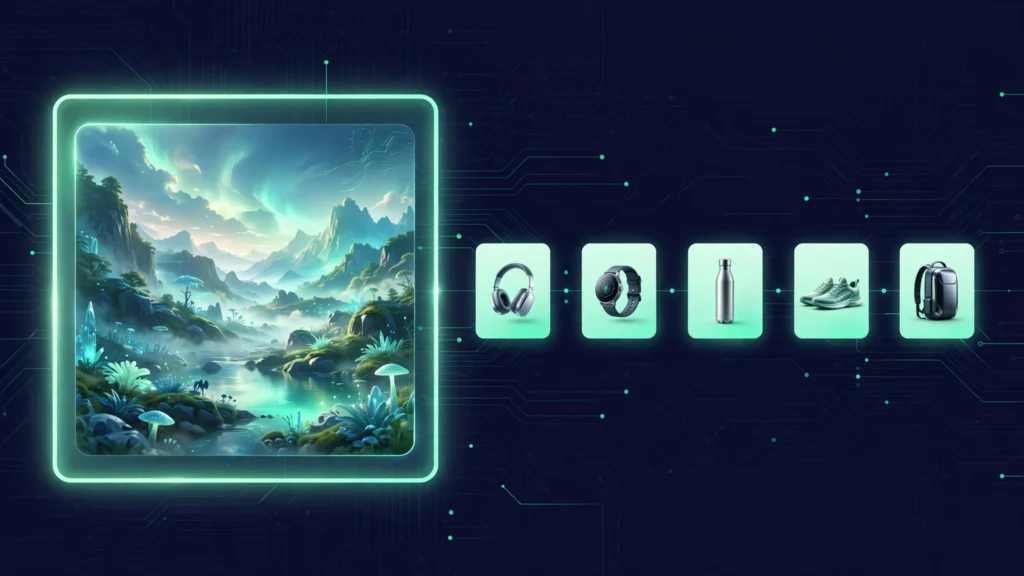
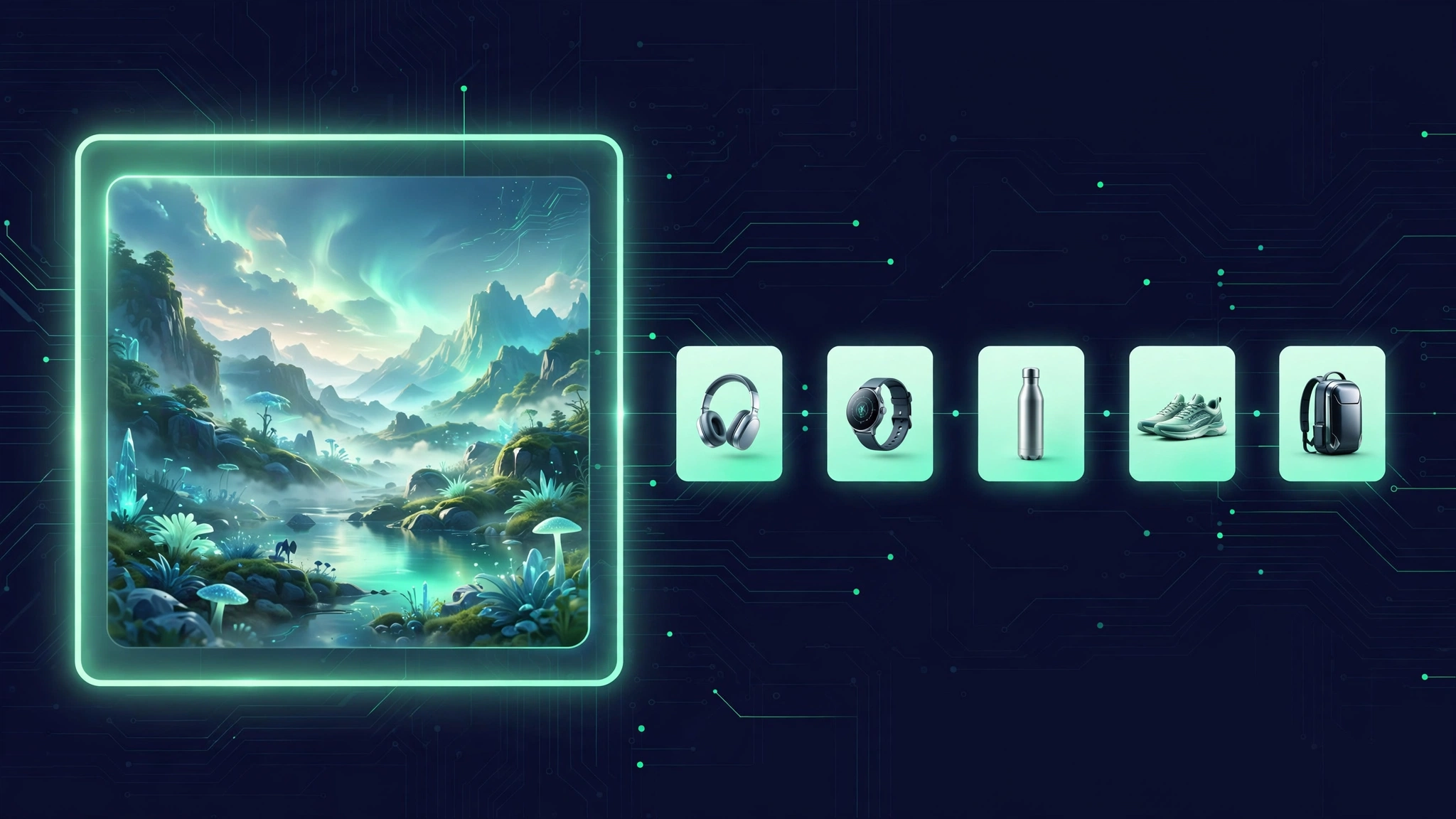
According to OpenAI’s announcement on October 5, 2026, the new format surfaces during the image-generation loading screen — that moment when you’ve asked ChatGPT to create an image and you’re waiting for it to render. Beside the image being generated, users in the test may see a product carousel: product images from advertisers, positioned around themes like product inspiration, products in use, or experiences.
Picture how the ChatGPT visual ads test works: you ask ChatGPT to generate an image of a cozy reading nook, and while the image is being created, you might see sponsored visuals of bookshelves, lamps, or furniture from participating brands. The ads are clearly labeled, and — importantly — OpenAI says they are kept visually separate from the image ChatGPT itself is generating. The sponsored content doesn’t get woven into your generated image; it sits alongside it.
A critical promise accompanies the announcement: ads do not influence ChatGPT’s answers. The company states that these ChatGPT visual ads have no bearing on what the model produces or recommends. That claim will inevitably face scrutiny, since the line between “advertising adjacent to an answer” and “advertising that shapes an answer” is exactly the trust boundary AI companies are now being asked to defend.
Who Actually Sees These Ads (and Who Doesn’t)
This is not a site-wide rollout. The test is deliberately narrow in three ways: geography, plan tier, and advertiser count.
First, geography: the ChatGPT visual ads test begins later in October 2026 in the United States only. Users outside the US will not see the new format during the test phase. Second, plan tier: only users on ad-supported plans — Free and Go — will see the ads. Subscribers on Plus, Pro, Business, Enterprise, and Education plans are excluded. The ads are also limited to logged-in adults in the US test group, which suggests OpenAI is deliberately steering clear of the youth-audience controversies that have dogged social platforms’ ad practices.
Third, advertiser volume: the ChatGPT visual ads test starts with an initial small group of advertisers. This isn’t an open self-serve ad auction on day one — it’s a controlled pilot, which gives OpenAI room to watch user reaction and brand response before scaling anything.
The tier split is worth pausing on. By drawing a hard line between paying and non-paying users, OpenAI is building a two-tier experience: subscribe and stay ad-free, or use the free tier and accept sponsored content. That model will feel familiar to anyone who has used streaming services in the last decade. The question is whether ChatGPT users — who adopted the tool partly because it felt like a clean, ad-free space — accept the trade the way streaming subscribers did.
What Advertisers Get: New Measurement and Brand-Safety Tools
OpenAI isn’t just selling ad slots; it’s building out the infrastructure advertisers expect before they’ll spend serious money. The announcement also covers an expansion of measurement tools, including conversion data integrations and attribution partnerships with companies like AppsFlyer, Adjust, and Branch, plus additional measurement partners.
Why does that matter? Attribution is the plumbing that tells an advertiser “your ad led to an install, a purchase, or a signup.” Without credible measurement, big brands treat a new ad channel as an experiment. With it — and with names advertisers already trust — OpenAI can argue that ChatGPT ads deserve real budget lines, not just test dollars.
On the brand-safety side, OpenAI says it’s running pilots with DoubleVerify and IAS (Integral Ad Science), the two best-known independent verification firms in digital advertising. Their job: independently confirm that ads are actually seen by real people in safe contexts. On top of that, OpenAI describes placement guardrails designed to keep ads out of sensitive or emotionally vulnerable conversations — a meaningful safeguard for a chatbot that people use for everything from homework to mental-health support.
That last detail reveals how differently advertising works inside an AI assistant versus a social feed. On social media, the “unsafe content” problem is about what appears next to the ad. In ChatGPT, the risk is reversed: the ad appears next to your private conversation. Placement guardrails that can read conversational context and hold ads back from delicate moments are a genuinely new requirement — and how well they work will determine a lot about public comfort with this format.
Why OpenAI Is Doing This: The Economics of Free AI
To understand the move, look at the numbers OpenAI itself has shared. ChatGPT reaches 1.2 billion people weekly, according to the company — an audience that rivals the largest social platforms on Earth. Serving that audience costs a fortune: every image generation, every long conversation, consumes GPU compute that someone has to pay for.
OpenAI has actually been selling ads in ChatGPT since February 2026, across more than 40 countries. The new visual format is an expansion of an existing business, not the start of one — and the business is already large. Per reports, ChatGPT ads reached a $1 billion annualized revenue run rate as of August 2026, and OpenAI internally forecasts $2.5 billion in full-year 2026 ad revenue.
That trajectory explains the urgency. Building and training frontier AI models burns capital at a scale the industry has never seen, and subscription revenue alone can’t fund both the research frontier and a free tier used by over a billion people a week. Advertising is the classic answer to the free-tier problem — it’s what funded free search, free social, and free streaming tiers. OpenAI is now applying the same playbook to free AI.
There’s a second, subtler pressure: compute is getting pushed to devices too. As AI features increasingly run on personal hardware, users are discovering that advanced local models are resource-hungry — reports suggest running capable models locally can demand around 60GB of memory, far beyond what typical laptops ship with. If you’ve wondered how much RAM you really need for modern AI workloads, the answer keeps climbing, which is one reason cloud-hosted AI — and the ads that subsidize it — isn’t going away.
ChatGPT Isn’t Alone: The Industry-Wide Experiment With AI Ads
OpenAI’s test is the most concrete example yet, but it’s part of a broader pattern. Google, Microsoft Copilot, and Perplexity have all been experimenting with advertising inside their AI products in various forms. Each is working through the same fundamental design question: how do you monetize an AI assistant without breaking the thing that made people trust it?
Search ads were easy by comparison — a list of links, clearly separated, with decades of user conditioning. AI answers are different. They’re conversational, authoritative-sounding, and personalized, which makes any advertising inside them feel more intimate and more consequential. Every company in this space is effectively running the same experiment OpenAI is: find the ad format users tolerate, measure everything, and scale carefully.
The competitive angle matters for users, too. If OpenAI’s ChatGPT visual ads test performs well — strong advertiser demand, minimal user backlash — expect rivals to accelerate their own formats. If it lands badly, the whole industry learns from the wreckage. Either way, what happens in this US test later this month will shape advertising across AI assistants for years.
What ChatGPT Visual Ads Mean for You: A Clear-Eyed Read
So, practically speaking, what should a ChatGPT user make of all this? A few things are worth holding in mind.
If you’re on Free or Go in the US: starting later this month, you may notice ChatGPT visual ads — sponsored product visuals appearing while you generate images. They’re labeled, they’re separate from your generated image, and — per OpenAI — they don’t change what ChatGPT produces. You can avoid them entirely by subscribing to a paid tier, which is exactly the choice OpenAI wants you to weigh.
If you’re a paying subscriber: nothing changes. Plus, Pro, Business, Enterprise, and Education plans are excluded from the test. Your subscription is, in part, paying for the absence of exactly this.
If you care about trust: watch two things. First, whether “ads don’t influence answers” holds up under independent scrutiny — researchers and journalists will be testing that claim the moment the test goes live. Second, how well the placement guardrails actually work in sensitive conversations. A guardrail that fails once in a vulnerable moment does more reputational damage than a thousand well-placed carousels can repair.
If you’re outside the US: this is a preview, not a verdict. OpenAI’s ads business already spans 40+ countries, and successful formats tend to travel. The US test is the canary; global expansion would be the natural next step if the numbers work.
One more practical note: the arrival of heavier AI features on personal devices means your own hardware is doing more AI work than ever. If your machine is feeling the strain — slower renders, fans spinning up during AI tasks — it may be worth learning how to speed up a slow laptop before blaming the software. Sometimes the bottleneck is the machine, not the model.
The Bigger Picture: Visual Ads in ChatGPT and the Future of AI Monetization
There’s a temptation to treat this as a small story — a new ad slot in a popular app. But it reads more like an inflection point. The era in which AI assistants were pristine, ad-free zones subsidized by venture capital and subscriptions is visibly ending. The free tier of the most-used AI product in history is about to carry sponsored product carousels, backed by billion-dollar revenue forecasts and the full measurement machinery of modern ad tech.
That doesn’t make it good or bad on its own. Advertising funded free search and free social media — and also produced the surveillance-advertising excesses we’re still reckoning with. The optimistic case for visual ads in ChatGPT is that OpenAI is doing it unusually carefully: labeled, separated, guardrailed, measured by third parties, and opt-out-able via subscription. The pessimistic case is that “careful” is how every ad expansion starts, and the formats only ever get more aggressive from here.
Which case wins will depend on what users do in the coming months — how they react, whether they subscribe to escape the ads or shrug and keep scrolling, and whether watchdogs find the trust promises holding. The test begins later in October. We’ll be watching what happens when it does.
Conclusion
OpenAI’s ChatGPT visual ads test is a small pilot with outsized implications: clearly labeled product carousels on the image-creation loading screen, US-only, Free and Go plans only, backed by new attribution tools and brand-safety pilots with DoubleVerify and IAS. It extends an ads business that started in February 2026, already runs at a $1 billion annualized rate, and is forecast to hit $2.5 billion for the full year.
For users, the practical takeaway is simple: paying subscribers stay ad-free, free-tier users in the US will soon see sponsored visuals, and everyone else gets a preview of where AI monetization is heading. The open questions — whether ads truly stay out of answers, whether guardrails hold in sensitive conversations, and how users react — are the ones that will decide how far this goes. As with every monetization story in tech, the format that launches in October won’t be the format that exists in a year. The direction of travel, though, is unmistakable.
Pingback: Apple HomeView: Apple's $299 Smart Home Hub Explained
Pingback: FTC Subpoenas OpenAI Anthropic: 50-Page AI Safety Probe
Pingback: How to Use Microsoft Copilot: Beginner's Guide (2026)
Pingback: GPT-6 Explained: OpenAI's Intelligent UI and New Model